

T: +86-571-87819638
P: +86-138-19484466
E: overseas@cnjinling.com
E: overseas@cnjinling.com
No. 38, JieFang East Road, DianKou Town, ZhuJi City, Zhejiang Province, China
Views: 0 Author: Site Editor Publish Time: 2025-11-04 Origin: Site


Cooling towers are essential for managing excess heat in industrial operations. However, without proper design and maintenance, they can pose significant fire risks. FM APPROVED cooling towers offer a solution by meeting stringent fire resistance standards. In this article, we will explore how FM APPROVED cooling towers help reduce fire risks and ensure operational continuity, especially in critical industries.
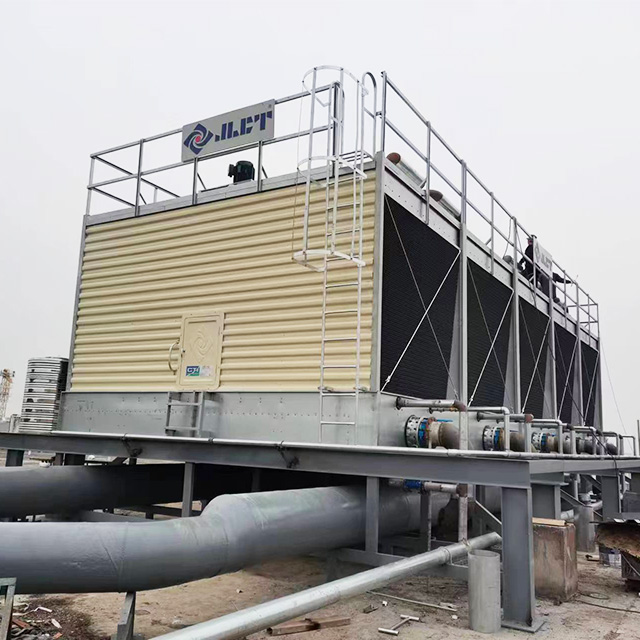
FM Approvals is a globally recognized organization specializing in loss prevention products and services. They set rigorous standards to ensure that products can withstand fire, natural disasters, and other environmental hazards without compromising their operational integrity. FM APPROVED certification signifies that a cooling tower has been thoroughly tested and meets FM Approvals’ high performance and fire safety standards.
The FM APPROVED mark assures facility owners that the cooling tower is designed with fire-resistant materials, can withstand fire exposure without catastrophic failure, and can continue to operate at a reduced capacity after a fire. It also ensures that the fire is contained within the cell where it originates, preventing it from spreading to adjacent cells or nearby structures.
Without FM APPROVED certification, cooling towers are at higher risk of fire damage. Cooling towers often contain combustible materials such as PVC, fiberglass, and wood, which can easily catch fire in the event of an electrical malfunction or mechanical failure. When fire spreads in non-FM APPROVED towers, it can damage not only the cooling tower but also surrounding cells, equipment, and buildings, causing widespread property damage and significant operational disruption.
In addition to fire hazards, the suspension of water flow during maintenance can lead to dry areas within the tower that are at risk of catching fire. These risks are exacerbated in towers that are not designed to contain the fire or prevent its spread, resulting in catastrophic failures that can cause severe operational downtime and financial losses.
FM APPROVED cooling towers undergo comprehensive fire tests that simulate real-world fire conditions. During these tests, the tower is subjected to controlled burn scenarios to evaluate its fire resistance and containment capabilities. The testing ensures that the cooling tower can contain the fire within the cell where it starts, preventing the fire from spreading to adjacent cells or structures.
FM APPROVED towers are built using fire-resistant materials such as fiberglass-reinforced plastics and steel, which do not contribute to fire spread. These towers are designed to isolate and contain the fire within a single cell, allowing the remaining cells to continue operating. This design significantly reduces the potential for widespread damage during a fire, ensuring that the system remains functional.
One of the standout features of FM APPROVED cooling towers is their ability to continue operating at reduced capacity after a fire event. This ability is particularly important in industries where cooling is vital to maintaining critical operations. For example, in power plants, data centers, or hospitals, the cooling system must remain operational, even in the event of a fire, to avoid expensive downtime and operational disruptions.
FM APPROVED cooling towers are designed to maintain up to 75% of their operational capacity after a fire. This resilience helps to avoid a complete system failure, providing essential cooling until the damaged parts of the system can be repaired or replaced.
FM APPROVED cooling towers offer significant cost savings for facility owners. Since FM APPROVED towers meet the highest fire safety standards, insurance companies often provide discounts on premiums for facilities that use these towers. This is because FM APPROVED certification reduces the overall risk of fire damage, lowering the likelihood of costly insurance claims.
Furthermore, FM APPROVED cooling towers can help eliminate the need for additional fire protection systems, such as external sprinklers. These systems can be expensive to install and maintain, and the absence of such systems in FM APPROVED towers represents a cost-saving benefit over the long term. This reduction in fire protection costs can offset the initial investment in FM APPROVED equipment.
In critical industries, such as healthcare, power generation, and IT, maintaining continuous operation is essential. Unplanned downtime can result in significant financial losses, equipment damage, and loss of reputation. FM APPROVED cooling towers are designed to mitigate these risks by continuing to operate, even during a fire event.
In hospitals, for example, the cooling system is necessary for maintaining air quality, temperature control, and equipment functionality. A fire in a non-FM APPROVED tower could shut down these essential systems, leading to serious consequences for patient care. FM APPROVED cooling towers ensure that these critical operations continue functioning, reducing downtime and keeping business operations running smoothly during emergency situations.
The FM APPROVED certification process is thorough and rigorous, involving a series of tests to ensure that the cooling tower meets the required safety standards. The process includes full-scale fire testing, where cooling tower cells are burned in a controlled environment to evaluate their performance under fire conditions. The testing also includes structural evaluations, wind pressure testing, and seismic calculations to ensure that the tower can withstand environmental hazards.
In addition to fire testing, the certification process includes audits of the manufacturer’s design and production processes to ensure that the cooling tower is built to meet FM Approvals' strict standards. This ensures that only the highest-quality towers are granted the FM APPROVED mark.
FM APPROVED cooling towers must meet the requirements outlined in Class Number 4930, the Approval Standard for Cooling Towers. This standard covers a wide range of tower designs, including single-cell, multi-cell, and rooftop models. It includes specific criteria for fire resistance, structural integrity, and environmental performance.
FM Approvals also requires manufacturers to provide detailed documentation of the tower’s design, including structural calculations, material formulations, and manufacturing processes. These requirements ensure that the cooling tower can perform reliably over its lifetime, even in extreme conditions.
Some of the leading FM APPROVED cooling tower models include the Marley® NC and Marley NC Everesta series. These models are designed to provide reliable, efficient cooling while meeting the stringent requirements of the FM APPROVED certification. They offer low drift rates, high energy efficiency, and robust fire resistance, making them ideal for industrial applications where fire safety is a top priority.
These towers are available in different configurations, including single-cell and multi-cell designs, to suit a wide range of operational needs. Their high capacity and proven performance make them a popular choice for critical applications in power plants, hospitals, and data centers.
FM APPROVED cooling towers are versatile, offering multiple design options to meet the needs of various industries. These towers can be configured as single-cell, multi-cell, or rooftop models, depending on the facility’s space and operational requirements.
Rooftop models, for example, are designed to minimize the impact of falling debris during fires, providing additional protection for facilities with limited space. Multi-cell models, on the other hand, allow for greater capacity and are ideal for large-scale operations where cooling requirements are higher.
| FM APPROVED Cooling Tower Model | Key Features | Ideal Applications |
|---|---|---|
| Marley® NC Series | Low drift, high efficiency, fire-resistant materials | Power plants, data centers |
| Marley NC Everesta | High capacity, robust design, energy-efficient | Industrial applications, large facilities |
| Marley MD Series | Modular design, easy installation | Hospitals, critical facilities |
FM APPROVED cooling towers are particularly valuable in critical industries where cooling failure can lead to catastrophic consequences. In the power generation sector, for example, the cooling system is essential for maintaining operational safety. A cooling tower failure can lead to overheating of machinery and shutdowns, causing significant downtime and repair costs.
In hospitals, the cooling system plays a crucial role in maintaining temperature control for sensitive medical equipment. FM APPROVED cooling towers ensure that cooling systems remain operational, even during emergencies, preventing potential equipment failures and ensuring patient safety.
FM APPROVED cooling towers are built to withstand harsh environmental conditions such as high winds, heavy storms, and extreme temperatures. Their durable construction ensures that they can continue operating even in the face of natural disasters, reducing the risk of cooling system failure in critical applications.
For facilities located in regions prone to severe weather, FM APPROVED cooling towers provide a reliable and robust solution to ensure continuous cooling and operational continuity. Their resilience ensures that facilities remain operational, even during the most challenging conditions.
| Environmental Condition | FM APPROVED Cooling Tower Performance |
|---|---|
| Severe Winds | Resilient design ensures stability and continued operation |
| Extreme Temperatures | Can operate in high heat without failure |
| Heavy Storms | Built to withstand debris and impact from storms |
FM APPROVED cooling towers are crucial for reducing fire risks, preventing damage, and ensuring operational continuity. These towers meet high fire resistance standards and remain operational during emergencies, offering great benefits. They are especially valuable in industries like power plants, data centers, and healthcare, where cooling is vital. FM APPROVED towers provide reliability, durability, and fire safety, minimizing downtime and costs. JLCT’s FM APPROVED products ensure peace of mind for facility owners, keeping operations running smoothly even in extreme conditions.
A: An FM APPROVED cooling tower is a cooling system certified for meeting stringent fire resistance standards. It helps prevent fire damage and ensures continued operation during emergencies.
A: FM APPROVED cooling towers offer enhanced fire safety, preventing fire spread and ensuring operational continuity even during a fire. They help minimize downtime and reduce long-term costs.
A: FM APPROVED cooling towers are designed to withstand fire, contain it within individual cells, and continue functioning at reduced capacity, ensuring safety and minimizing damage to surrounding structures.
A: Yes, FM APPROVED cooling towers can operate at up to 75% capacity after a fire, ensuring critical operations continue with minimal disruption.
A: Choosing an FM APPROVED cooling tower can reduce insurance premiums, eliminate the need for costly sprinkler systems, and minimize maintenance costs due to its fire-resistant design.


