

T: +86-571-87819638
P: +86-138-19484466
E: overseas@cnjinling.com
E: overseas@cnjinling.com
No. 38, JieFang East Road, DianKou Town, ZhuJi City, Zhejiang Province, China
Views: 0 Author: Site Editor Publish Time: 2025-11-07 Origin: Site


Have you ever wondered how natural processes can cool a space more efficiently than traditional air conditioning? Evaporative cooling is one such method. It relies on water evaporation to lower air temperature, making it an energy-efficient alternative. In this article, we’ll explore how evaporative cooling works, its benefits, and its role in cooling towers for industrial and commercial use.
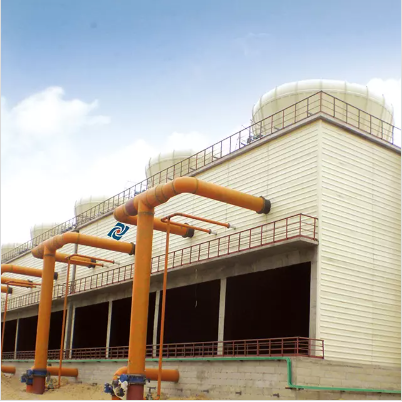
Evaporative cooling is a method that harnesses the natural process of water evaporation to cool the air. When water evaporates, it absorbs heat from its surroundings, which lowers the air temperature. The cooling effect is achieved because the energy required for evaporation comes from the surrounding air. This process is widely used in both small-scale and large-scale systems, such as swamp coolers, air conditioners, and industrial cooling towers.
Unlike conventional air conditioning systems that rely on refrigerants and compressors, evaporative cooling is more sustainable, uses less energy, and doesn’t contribute to environmental pollution. The simplicity and efficiency of this system make it a compelling choice for both residential and commercial applications.
Evaporative cooling offers several benefits that make it an appealing option, especially in hot, dry climates. The primary advantages are its energy efficiency and eco-friendliness. Traditional air conditioning systems use chemical refrigerants and consume substantial amounts of electricity, which leads to higher energy bills and environmental impact. In contrast, evaporative cooling uses only water, which is far more sustainable and requires significantly less energy. This makes it an ideal solution for businesses and residential buildings seeking to reduce their carbon footprint while maintaining a comfortable indoor environment.
Evaporative cooling systems are also particularly effective in areas where cooling is needed but water conservation is a priority. Unlike refrigeration systems, which recirculate indoor air, evaporative cooling brings fresh, filtered air into the building, further improving air quality.
The core principle behind evaporative cooling is based on the heat absorption that occurs when water evaporates. In an evaporative cooling system, warm air is drawn through water-saturated cooling pads. As the air passes through the pads, the water evaporates, absorbing the heat from the air in the process. This lowers the temperature of the air and creates a cooler, more comfortable environment. The energy required to turn water into vapor, known as latent heat, is taken from the surrounding air, resulting in cooler temperatures.
One important thing to note is that evaporative cooling doesn’t just cool the air—it also adds moisture. Therefore, it’s ideal for dry, arid climates, where adding humidity can improve comfort levels. However, in high-humidity environments, this added moisture may not be desirable, which leads to the development of indirect evaporative cooling systems.
There are two main types of evaporative cooling systems: direct and indirect. Both methods have distinct applications and offer different efficiencies depending on the environment.
| Cooling Type | Description | Efficiency | Humidity Impact |
|---|---|---|---|
| Direct Evaporative Cooling | Involves passing warm air through water-soaked pads, increasing humidity. | Simple, energy-efficient. | Increases indoor humidity. |
| Indirect Evaporative Cooling | Uses a heat exchanger to cool air without adding moisture. | More energy-efficient in humid climates | Maintains lower humidity. |
Direct Evaporative Cooling: In this method, warm air is passed directly through water-saturated cooling pads. As the air moves through these pads, the water evaporates, cooling the air and raising its humidity levels. This is a simple and cost-effective method, but the increase in humidity can be uncomfortable in areas where the air is already humid.
Indirect Evaporative Cooling: Unlike direct evaporative cooling, indirect cooling systems use a heat exchanger to cool the air without adding humidity. This is especially useful in environments where high humidity is undesirable. The air is cooled by transferring heat from the incoming air to a separate stream of water, which evaporates and carries the heat away. This method is more energy-efficient than direct cooling, as it avoids increasing humidity while still lowering temperatures.
Two-stage evaporative cooling is an advanced system that combines both direct and indirect cooling methods. The first stage uses indirect evaporative cooling to reduce the temperature of the incoming air without adding moisture. In the second stage, direct evaporative cooling is used to further lower the temperature by evaporating water and absorbing more heat.
This two-stage process offers greater cooling efficiency and reduces humidity, making it ideal for industrial and commercial settings where maintaining a comfortable, low-humidity environment is critical. Compared to traditional one-stage evaporative cooling, two-stage systems can provide up to 7°C lower temperatures with up to 70% less humidity, making them highly effective in larger buildings or facilities.
A cooling tower is a device used in evaporative cooling systems to lower the temperature of water used in industrial processes or air conditioning systems. It functions by using the evaporation of a small portion of water to cool the remaining water in the system. Cooling towers are commonly used in power plants, HVAC systems, and other large-scale applications where efficient heat dissipation is required.
Cooling towers operate by drawing warm water through a network of pipes and spraying it over cooling media, such as cooling pads or "fill." As the water flows through the fill, it is exposed to the surrounding air, causing a portion of the water to evaporate. The evaporation process removes heat from the remaining water, which cools it down. Fans or natural drafts help pull air through the cooling tower, aiding in the evaporation process.
| Cooling Tower Type | Airflow Direction | Water Flow Direction | Efficiency |
|---|---|---|---|
| Crossflow Cooling Tower | Horizontal | Vertical | Suitable for smaller applications |
| Counterflow Cooling Tower | Vertical | Vertical | More efficient for larger applications |
There are two main types of cooling towers:
Crossflow Cooling Towers: Water flows vertically through the fill while air flows horizontally, across the water. This design makes crossflow cooling towers suitable for smaller applications where space and height are limited.
Counterflow Cooling Towers: In counterflow towers, air flows vertically upwards against the downward-flowing water. This design is typically used for larger cooling applications and is more efficient than crossflow systems.
Cooling towers are essential in industrial applications because they help dissipate the heat generated by machinery and processes. Without cooling towers, the temperature of water in industrial systems would rise, reducing the efficiency of the cooling system and potentially damaging the equipment. Cooling towers also play a crucial role in reducing the environmental impact of cooling processes by minimizing water and energy usage. They offer an efficient solution for large-scale facilities that require constant, high-efficiency cooling.
Evaporative cooling systems use a fraction of the energy required by traditional air conditioning systems. While air conditioners rely on compressors and refrigerants to cool air, evaporative cooling systems only need water and a fan, which reduces energy consumption significantly. This not only saves on energy costs but also contributes to reducing the overall environmental impact of cooling systems.
Moreover, the initial investment in evaporative cooling systems tends to be lower than that of traditional air conditioning units, making them a cost-effective option for both residential and commercial applications.
Evaporative cooling is inherently more sustainable than traditional cooling methods. By using water instead of chemical refrigerants, evaporative systems do not contribute to greenhouse gas emissions or ozone depletion. The lower energy consumption of these systems also reduces carbon footprints, aligning with global efforts to reduce energy consumption and mitigate climate change.
One of the major advantages of evaporative cooling is the improvement in indoor air quality. Unlike traditional air conditioners, which recycle indoor air, evaporative cooling systems bring in 100% fresh, filtered air. This continuous influx of fresh air can reduce the buildup of indoor pollutants and allergens, creating a healthier environment for occupants.
Evaporative cooling is commonly used in office buildings, retail centers, and residential homes. In hot, dry climates, evaporative coolers can provide an energy-efficient and environmentally friendly way to cool indoor spaces. They are ideal for areas where high humidity is not a concern, and they can help reduce cooling costs while maintaining comfort.
Evaporative cooling systems are crucial in industrial settings, such as factories, warehouses, and data centers. These systems help maintain optimal temperatures for equipment and employees, improving productivity and preventing overheating. Industrial evaporative cooling systems are particularly effective in large-scale facilities where traditional air conditioning would be too costly or energy-intensive.
Evaporative cooling is most effective in regions with dry, hot climates, such as the Southwest United States. Areas with low humidity levels allow for maximum evaporation, resulting in effective cooling. In contrast, in areas with high humidity, the effectiveness of evaporative cooling may be limited, and alternative cooling methods may be required.
Evaporative cooling is less effective in humid climates because the air is already saturated with moisture, which reduces the rate of evaporation. In such conditions, the cooling process becomes less efficient, and additional measures, such as using an indirect evaporative cooling system, may be needed to achieve effective cooling.
Evaporative cooling systems require regular maintenance to ensure optimal performance. The cooling pads must be kept clean and moist, and the system should be checked for any blockages or water quality issues. Additionally, while these systems use less energy, they do consume water, so sustainable water management practices should be employed to minimize waste.
Evaporative cooling is an efficient and sustainable solution, ideal for dry climates. It saves energy, improves air quality, and reduces environmental impact. This system enhances operational efficiency and comfort, especially in industrial and commercial settings. As technology advances, innovations like two-stage cooling systems will improve cooling performance while minimizing water and energy use. JLCT offers cutting-edge evaporative cooling products, providing exceptional value for businesses aiming to reduce costs and environmental impact.
A: Evaporative cooling uses water evaporation to cool the air. It’s more energy-efficient than traditional AC systems and ideal for dry climates.
A: A cooling tower uses evaporation to lower the temperature of water used in industrial processes. The cooled water is then recirculated.
A: Evaporative cooling is energy-efficient, eco-friendly, and improves air quality by bringing in fresh, filtered air.
A: Unlike traditional AC, evaporative cooling uses water and air, saving energy and reducing environmental impact while maintaining comfort.
A: Evaporative cooling is less effective in humid areas. Indirect systems or cooling towers may be more efficient in such conditions.
A: Evaporative cooling is generally less expensive to install and operate, making it a cost-effective alternative to traditional air conditioning systems.


